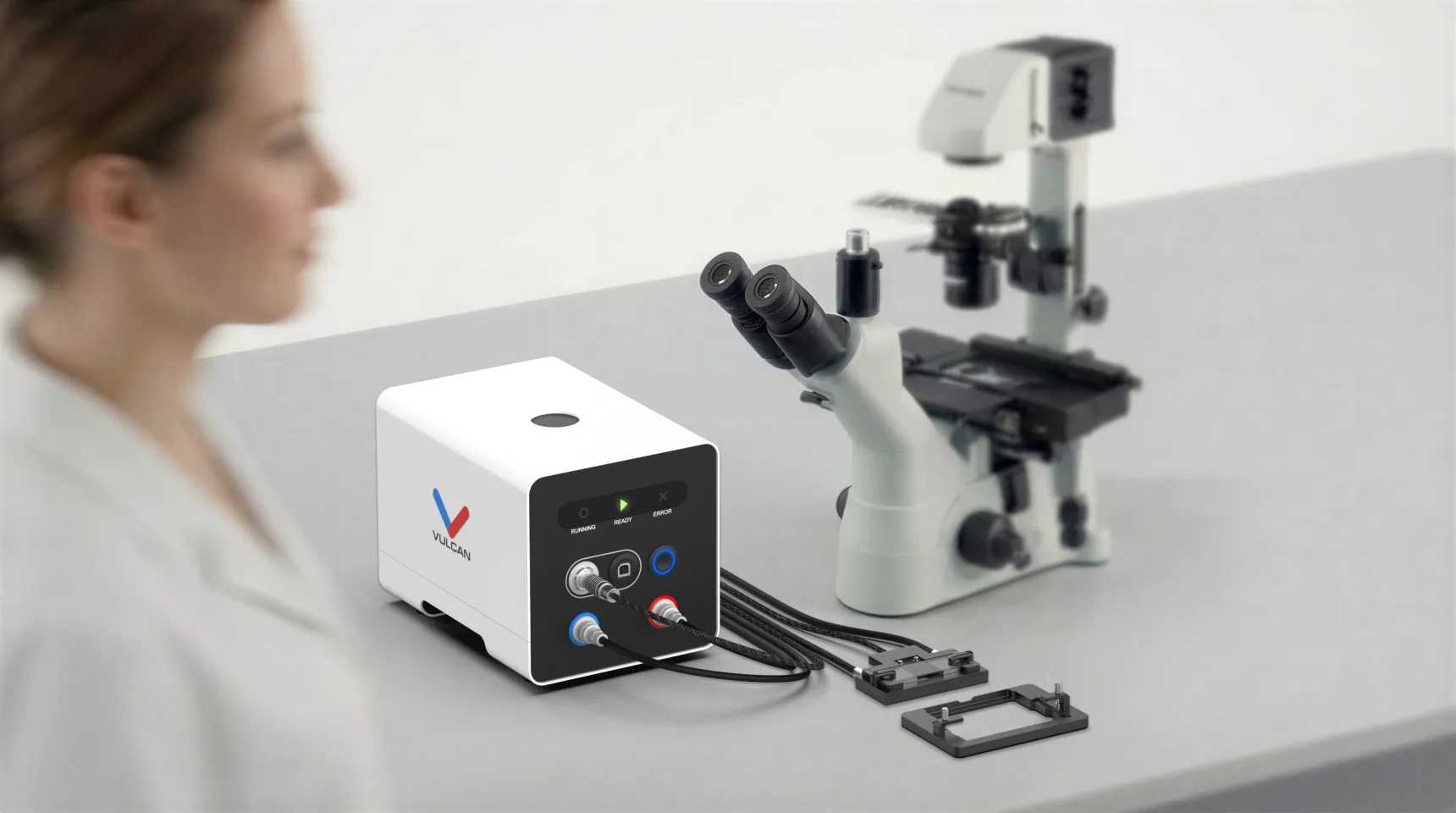
Full Temperature Control.
Achieve complete control over your sample conditions with precise heating, cooling, and dynamic temperature regulation.
What you get.
Unlock impossible experiments.
Run protocols that no other system can deliver.
Heat and cool in seconds.
Rapid thermal transitions with zero overshoot.
Export every data point.
One-click temperature data export, ready for analysis.
Save. Repeat. Reproduce.
Build custom temperature profiles and store experiment settings.
See everything. Control everything.
Transparent, heat-conductive slide for perfect widefield imaging with full thermal control.
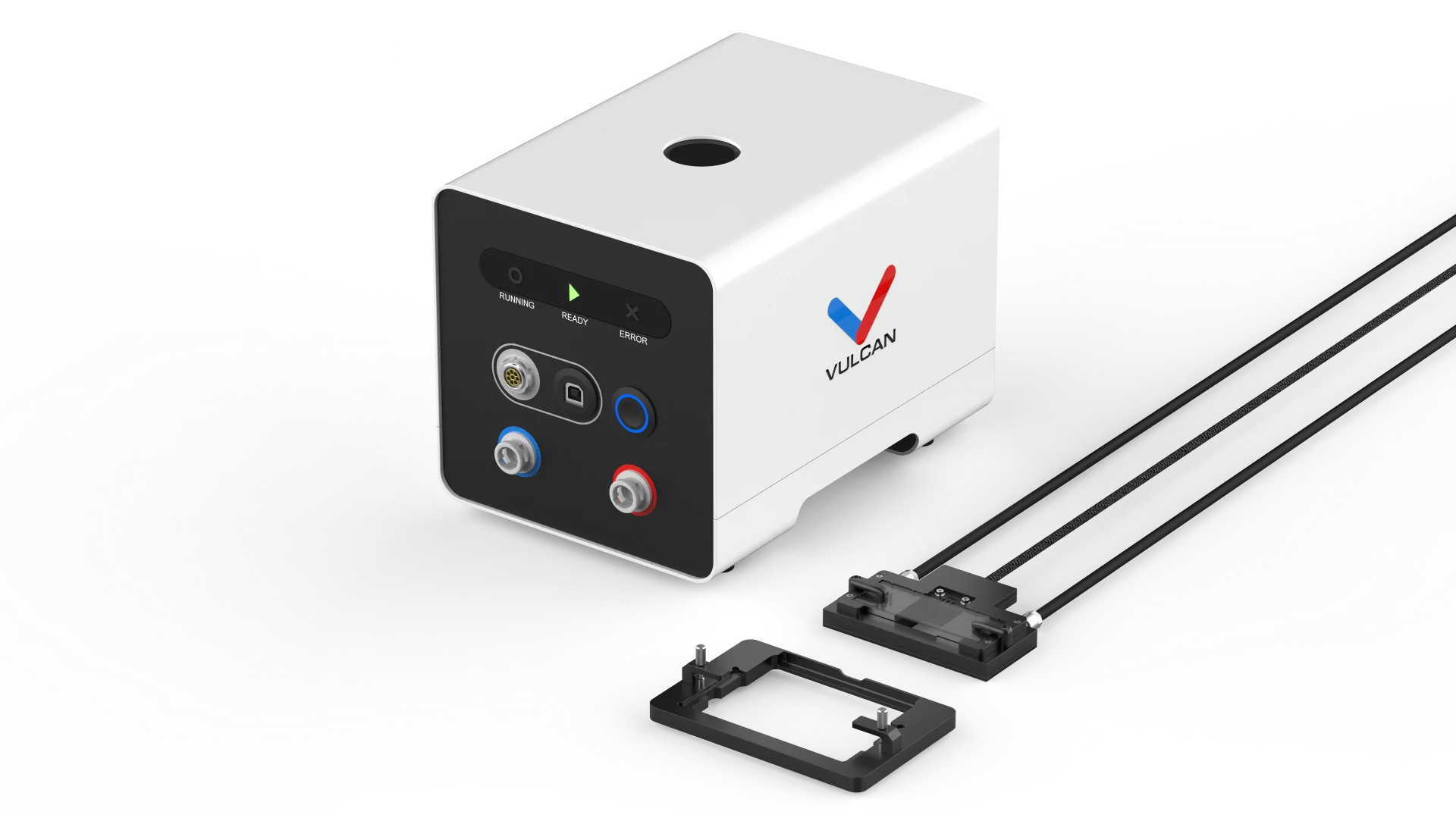
Designed to be modular.
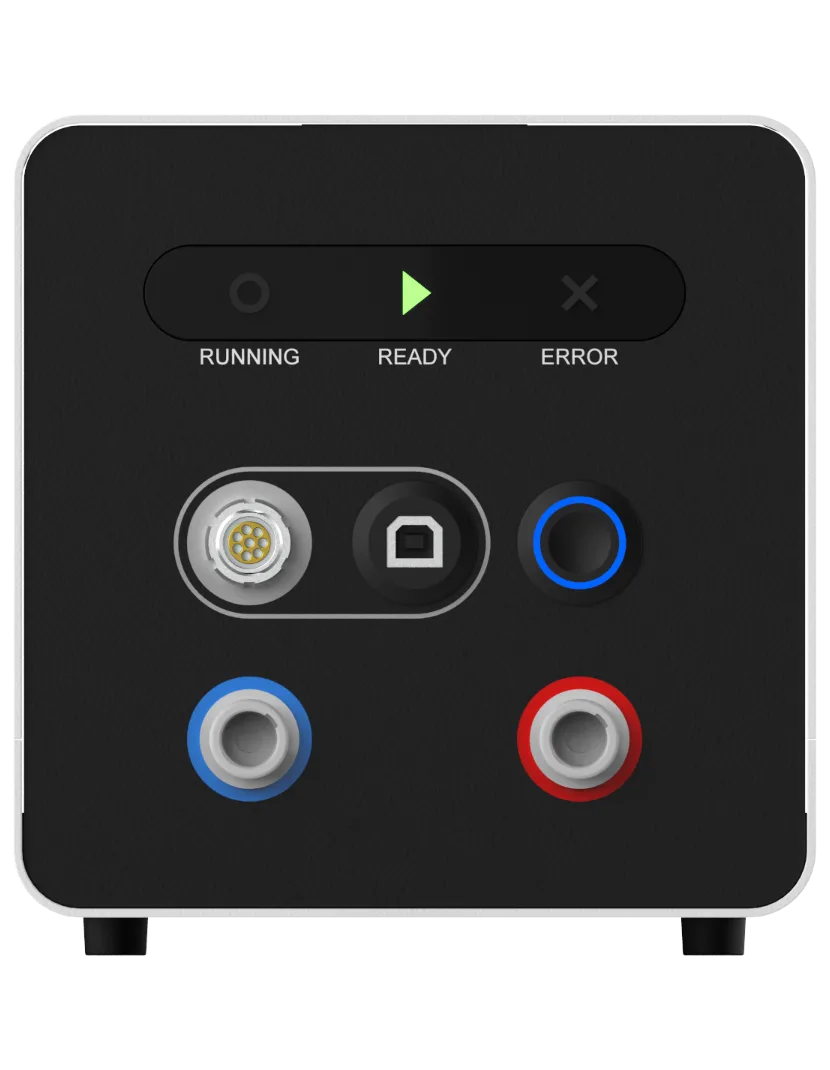
The Control Unit
The BrainPID controller holding ±0.1°C at steady state. Connects to any computer via USB.
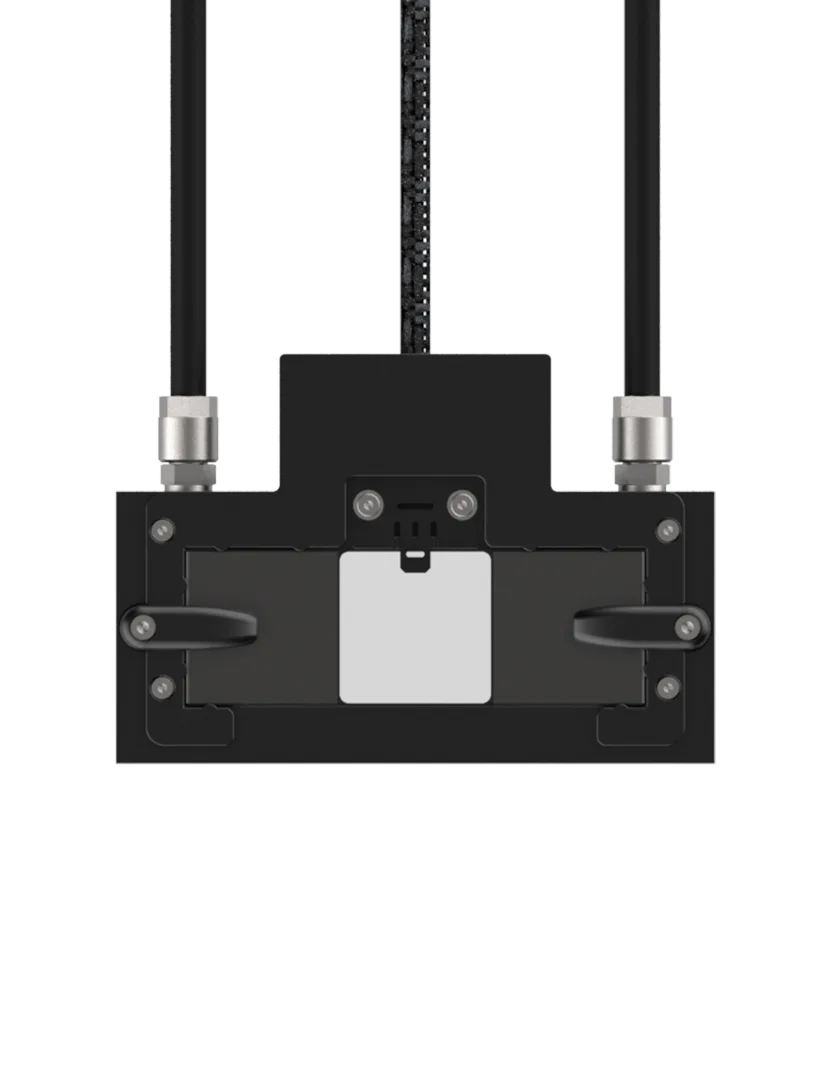
The Stage
The SurfaceAnodised aluminium with integrated RTD sensors. Uniform thermal distribution across the imaging area.
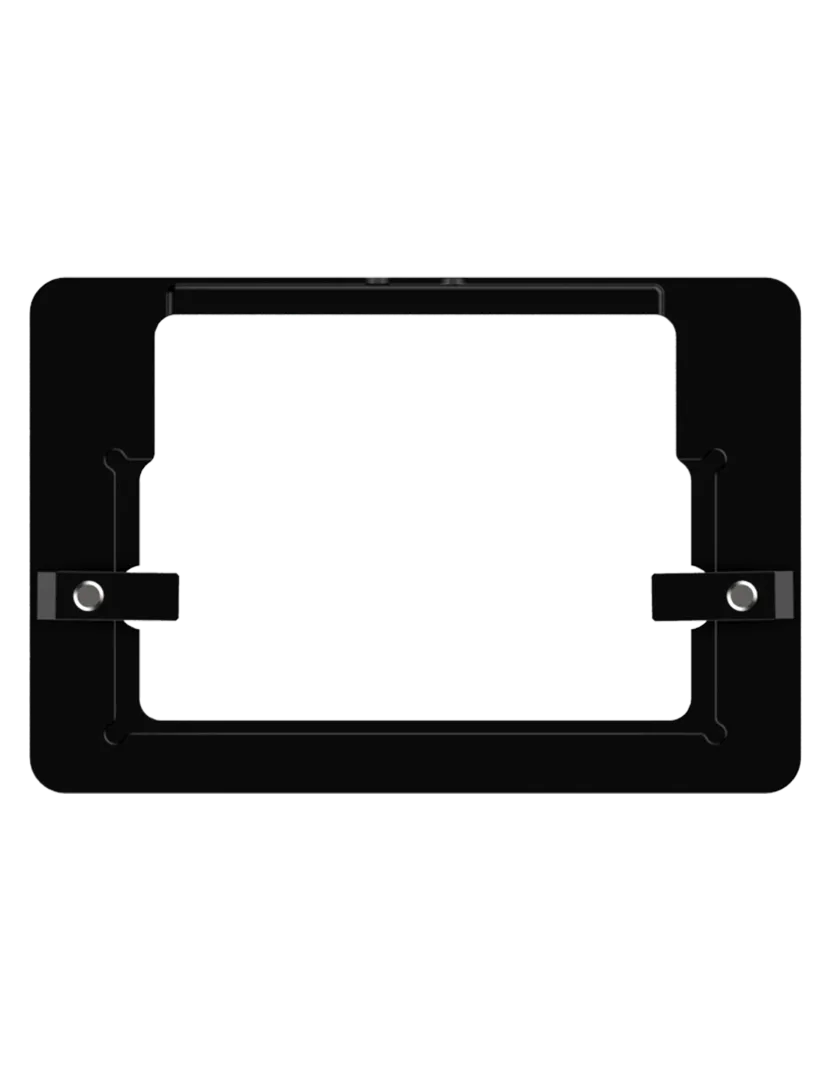
The Adapter
The MountUniversal mounting system on a 96-well plate footprint. Tool-free installation in under 5 minutes.
Full control. Full software.
Every instrument ships with the control software: hold a temperature by hand, run a multi-step programme unattended, and keep the record of both.
Four steps to stability.
Integration
The microscope adapter snaps directly onto your inverted microscope stage.
How it is doneConnection
Three lines run from the stage to the control unit: a coolant supply and return pair, plus one connector carrying power and sensor data. A USB-B port connects the control unit to your computer for full command.
How it is doneCommand
Set your target temperature via the software, or run complex temperature profiles. Your data is stored and ready for export when you need it.
How it is doneExport
At run end, export the temperature log as a CSV with timestamps. Paste directly alongside image metadata. Methods section writes itself.
How it is doneEngineered for the experiments that matter.
±0.1°C Stability
Holds setpoint to ±0.1°C at steady state, with 0.01°C setpoint resolution.
−10°C to 80°C Range
Covers cryo-adjacent through heat-shock workflows in a single device.
1°C/s Ramp Rate
Rapid heating and cooling transitions without overshooting the target setpoint.
Integrated Liquid Cooling
Active liquid cooling enables sub-zero operation and consistent ramp performance under load.
Drop-in Microscope Fit
ANSI/SLAS 1-2004 footprint sits in any inverted microscope stage holder.
Profile Control + CSV Export
Vulcan software (Windows, macOS) runs profiles, logs live data, and exports to CSV.
The numbers that matter.
These numbers describe the stage. To see what the sample itself experiences, explore the thermal simulation
Built by scientists, for scientists.
Our team combines decades of experience in precision instrumentation, thermal engineering, and microscopy, drawn from the world's leading research institutions.



Ermis Papakonstantinou
Scientific Sales SpecialistM.Sc. Biomedicine, Universität Mainz6 years of research experience in molecular medicine and protein biochemistry using live-cell confocal microscopy.
Backed by leading institutions.
We're supported by partners who believe in advancing scientific instrumentation.






Built with world-class collaborators.
Our technology is co-developed alongside leading engineering firms.




Trusted by researchers.
Mechanistic basis of temperature adaptation in microtubule dynamics across frog species
Compares microtubule assembly across three frog species adapted to different temperatures, combining cryo-EM with temperature-controlled in vitro reconstitution to show that tubulin free energy scales inversely with temperature, explaining microtubule stability in cold-adapted species.
Troman et al.bioRxiv · 2024inPhase — A simple, accurate and fast approach to determine phase diagrams of protein condensates
Reports inPhase, a method based on mass and volume conservation that yields accurate dilute and condensed protein concentrations, enabling precise phase diagrams of condensate-forming proteins and exposing systematic underestimation by the widely used fluorescence approach.
Fritsch et al.PNAS · 2021Local thermodynamics govern formation and dissolution of Caenorhabditis elegans P granule condensates
Reveals that protein-rich P granule condensates in C. elegans embryos form and dissolve reversibly with temperature, providing direct evidence that local thermodynamic principles spatially organize biomolecules in living cells.
Fritsch et al.Studies used research-stage prototypes that preceded the commercial VTS-100.
Unlock new experiments.
Contact our applications team for a custom quote, or download the full technical datasheet for your records.